

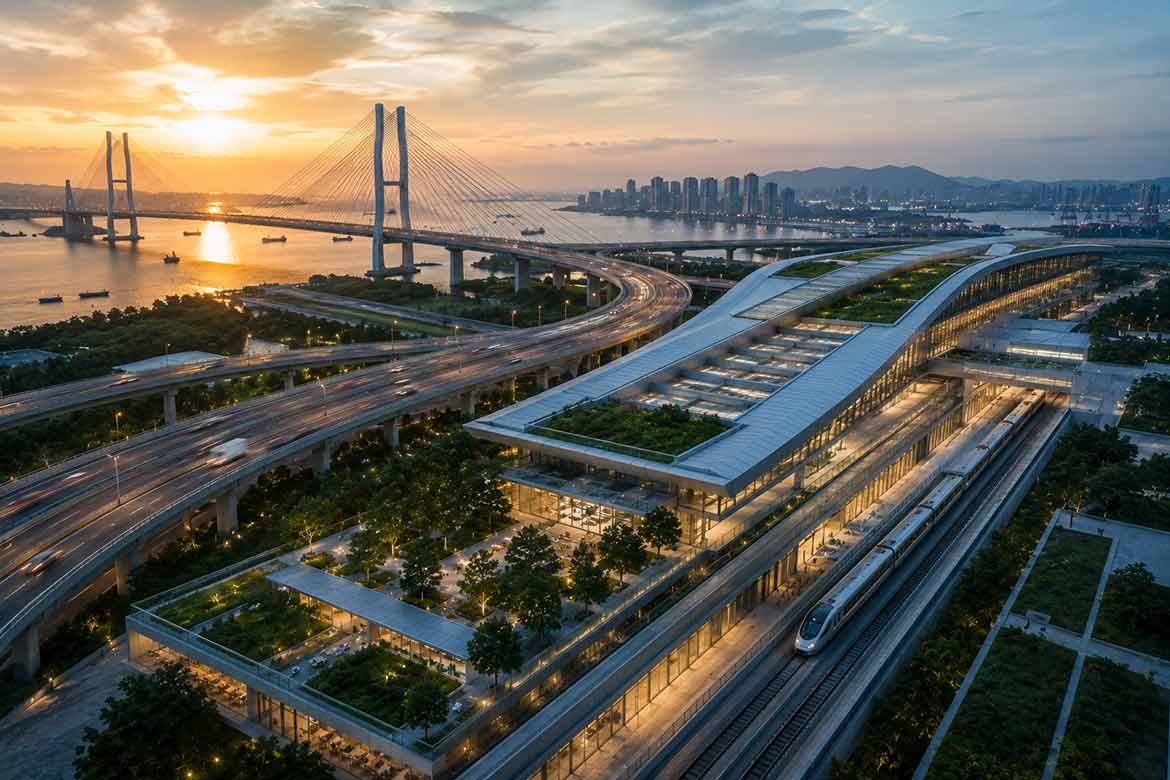
Urban operational corridors continue expanding across major metropolitan environments as infrastructure planners focus on improving coordination between transportation systems, public access, and long-term urban efficiency.
New development strategies increasingly emphasize integrated mobility environments that connect rail systems, pedestrian infrastructure, public facilities, and institutional architecture into more adaptive and coordinated operational ecosystems.
Across emerging urban districts, infrastructure operators are also investing in cleaner spatial organization, intelligent environmental management, and structured public flow systems designed to support long-term operational resilience.
Industry observers note that mobility infrastructure is becoming more deeply connected with architectural planning and urban coordination strategies rather than functioning as isolated transportation projects.
As cities continue modernizing infrastructure systems, integrated operational corridors are becoming an increasingly important part of next-generation urban development and intelligent public environments.
By Central News Editorial Team
Source: Central.News
Related:
Explore more in Policy, Markets, Tech, Infrastructure, and AI.
This article is part of an ongoing editorial series by Central.News covering global systems across policy, markets, infrastructure, and technology. New insights are published daily.