

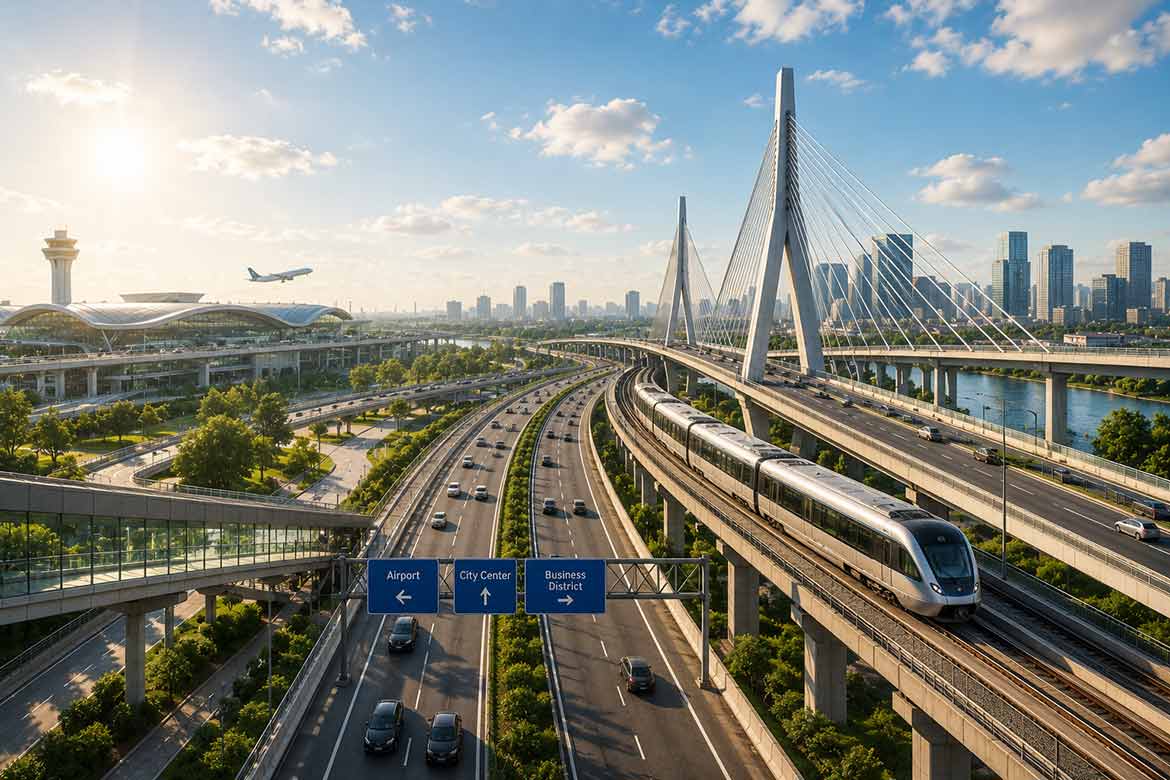
Large-scale mobility infrastructure projects continue advancing across major urban regions as governments and institutional planners invest in more connected transportation systems and long-term operational coordination environments.
Modern infrastructure development increasingly integrates airport connectivity, bridge systems, transit coordination, public accessibility planning, and architectural efficiency into broader urban mobility ecosystems.
Industry analysts note that transportation infrastructure is gradually evolving toward calmer and more operationally integrated systems designed to support long-term economic growth and sustainable urban expansion.
Across newly developed infrastructure corridors, operators are emphasizing intelligent coordination, environmental efficiency, and scalable transportation frameworks capable of supporting future urban demands.
As urban modernization efforts continue accelerating globally, mobility infrastructure systems are becoming increasingly central to long-term city development strategies.
By Central News Editorial Team
Source: Central.News
Related:
Explore more in Policy, Markets, Tech, Infrastructure, and AI.
This article is part of an ongoing editorial series by Central.News covering global systems across policy, markets, infrastructure, and technology. New insights are published daily.