

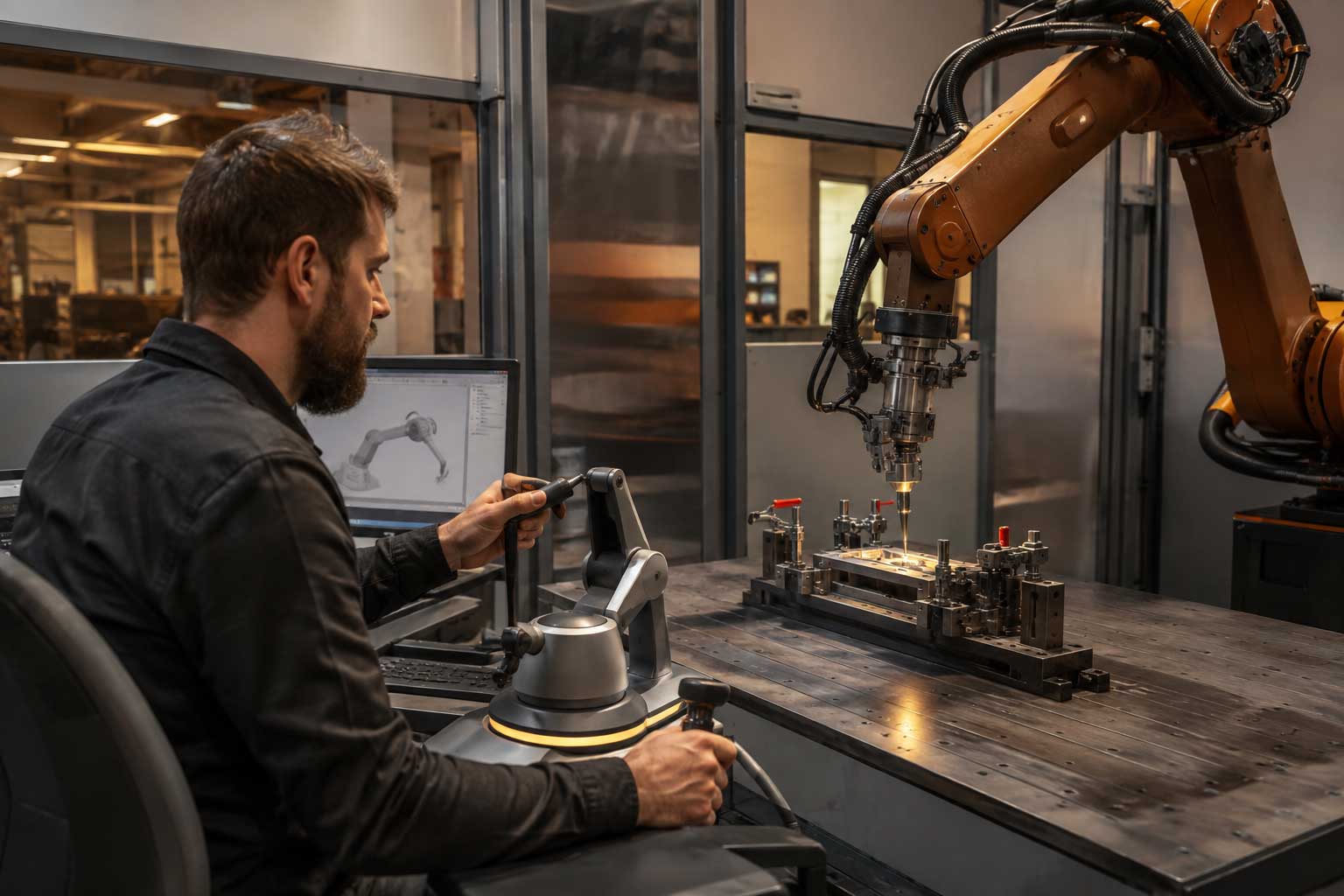
Human-machine interfaces are becoming increasingly important as industrial automation moves into tasks that require greater precision, flexibility and operational judgment. Physical controls, haptic devices and carefully designed operator interfaces allow technicians to guide automated systems while maintaining direct awareness of how machines are responding.
This relationship matters because automation does not eliminate the need for human responsibility. In complex manufacturing environments, operators may still need to approve movements, adjust parameters, interrupt operations or respond to unexpected conditions. Interfaces that make machine status and operator intent clear can reduce ambiguity while helping people remain meaningfully involved in critical decisions.
As robotic systems become more capable, interface design is therefore becoming part of industrial safety and governance. The most effective automation may not be the system that removes people completely, but the one that clearly defines where machine execution ends and human judgment begins.
By Central News Editorial Team
Source: Central.News
Related:
Explore more in Markets, Infrastructure, and AI & Technology.
This article is part of an ongoing editorial series by Central.News covering global systems across Markets, Infrastructure, AI & technology. New insights are published daily.