

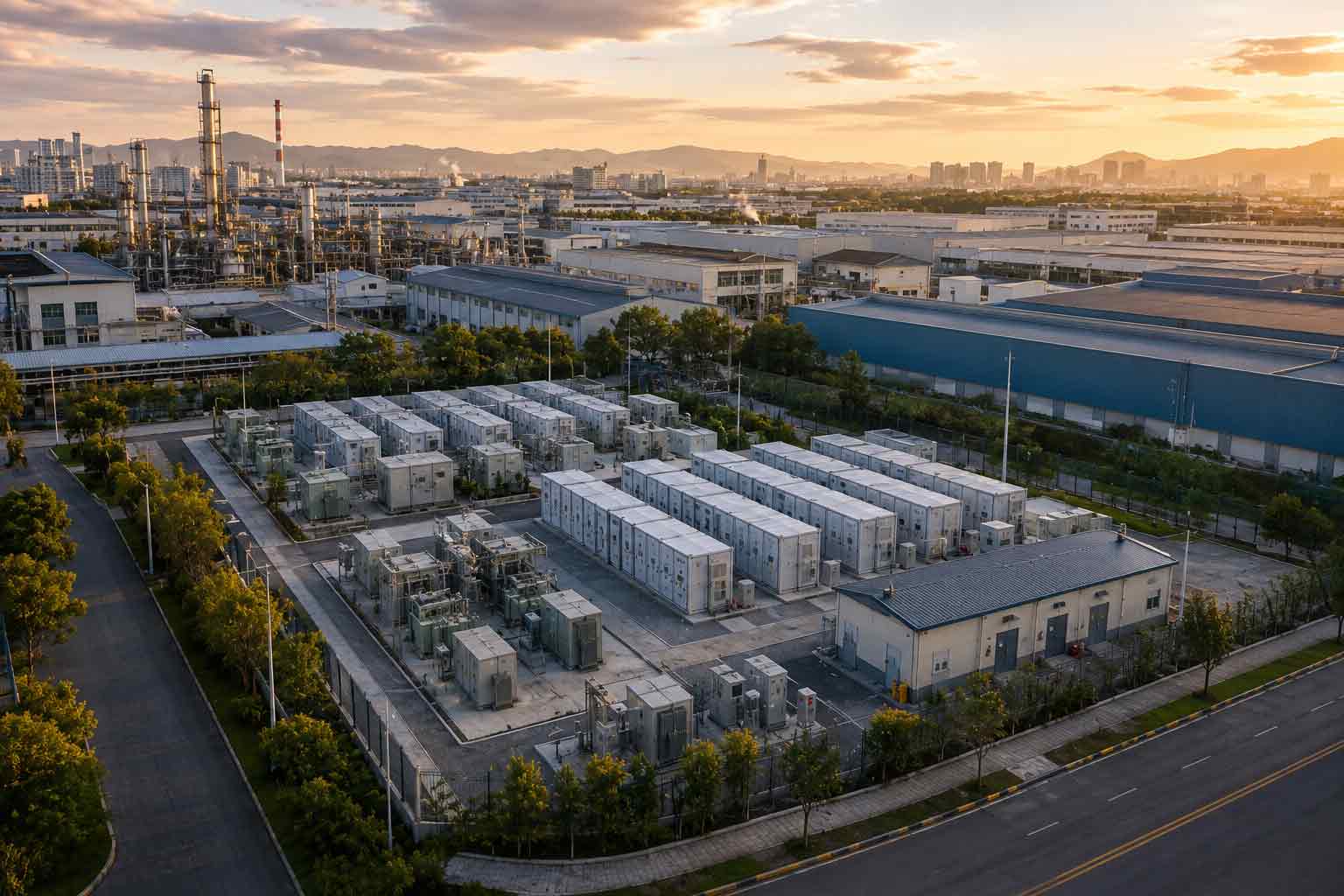
Battery storage facilities are becoming an important part of local energy infrastructure as cities and industrial districts manage more variable electricity demand and increasingly complex power flows. By storing electricity when supply is available and releasing it during periods of higher demand, these systems can help reduce pressure on local grids, support renewable generation and provide additional capacity during short-term disruptions.
Their value is especially visible in industrial areas where factories, logistics facilities, data systems and electrified equipment can create large and rapidly changing loads. Battery storage positioned close to these users can help smooth demand peaks, improve voltage stability and reduce the need for immediate expansion of other grid assets. When connected with substations, monitoring systems and automated controls, storage becomes part of a coordinated local energy network rather than a standalone technology.
As electrification continues across manufacturing, transport and urban services, battery storage facilities are increasingly becoming strategic infrastructure. Their role is not simply to hold electricity, but to give local energy systems greater flexibility, resilience and the ability to respond more effectively to changing patterns of generation and consumption.
By Central News Editorial Team
Source: Central.News
Related:
Explore more in Markets, Infrastructure, and AI & Technology.
This article is part of an ongoing editorial series by Central.News covering global systems across Markets, Infrastructure, AI & technology. New insights are published daily.