

CENTRAL.NEWS
Image default
Infrastructure

Modular Construction Is Changing How Infrastructure Capacity Is Added

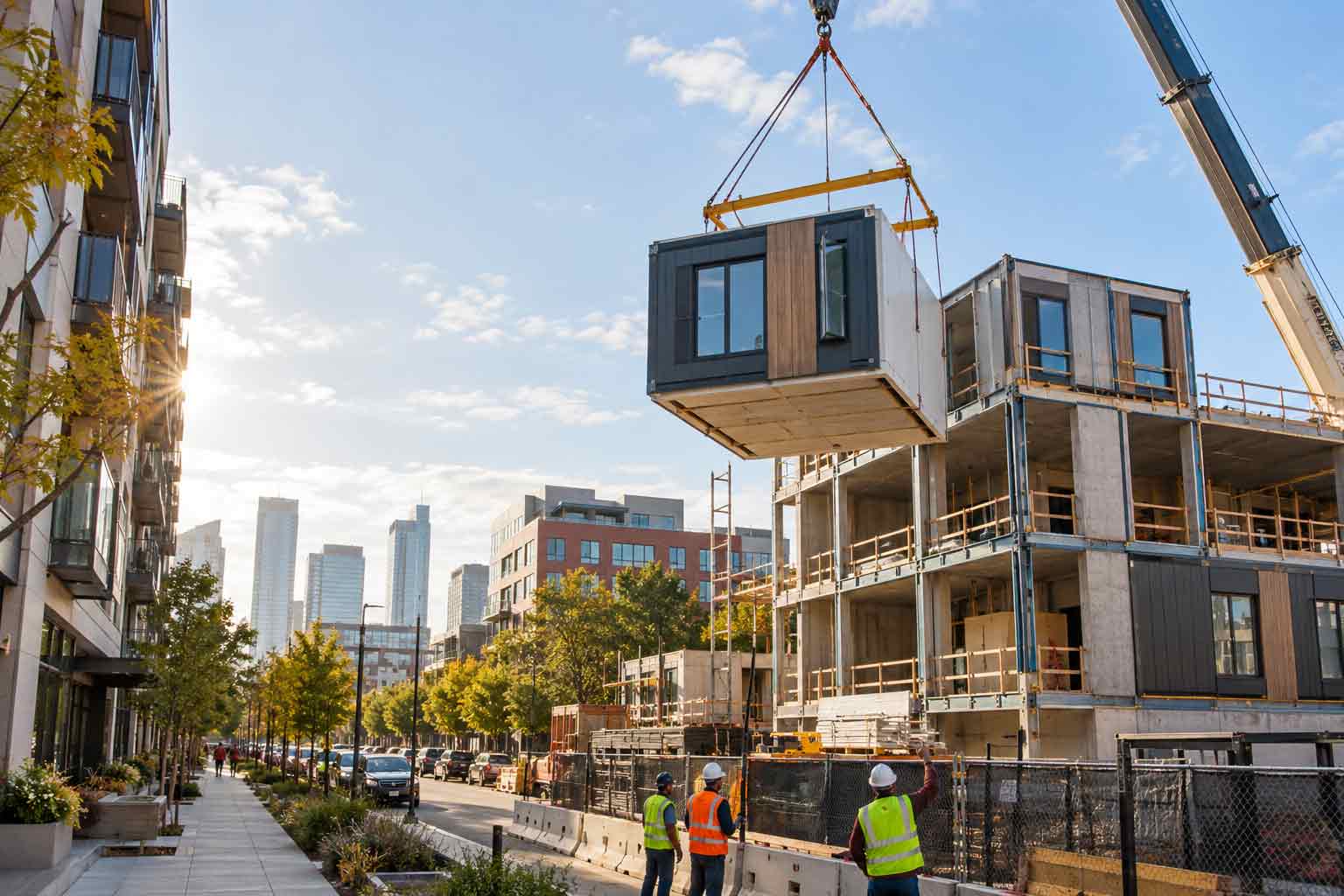
Modular construction is becoming a more important part of how cities and infrastructure operators add new capacity. Instead of completing every stage of construction directly on site, major sections of a building or facility can be manufactured in controlled environments and transported to their final location for installation.

The approach can shorten construction schedules because site preparation and module production can happen at the same time. It can also improve consistency by moving more work into factory environments where materials, measurements and assembly processes are easier to control.

Modular systems are increasingly being considered for housing, schools, healthcare facilities, data infrastructure, utility buildings and other projects where repeatable designs can be deployed across multiple locations. This makes the method especially relevant where infrastructure needs to expand quickly.

The shift also changes supply chains. Manufacturers, transport operators, engineering teams and construction contractors must coordinate more closely because modules arrive as larger and more complete components rather than as individual building materials.

The broader significance is that infrastructure construction is becoming more industrialized. As modular systems improve, future capacity may increasingly be added through standardized components that can be manufactured, transported and assembled with greater speed and predictability.

By Central News Editorial Team
Source: Central.News

Related:
Explore more in  Markets,  Infrastructure, and AI & Technology.

This article is part of an ongoing editorial series by Central.News covering global systems across Markets, Infrastructure, AI & technology. New insights are published daily.