

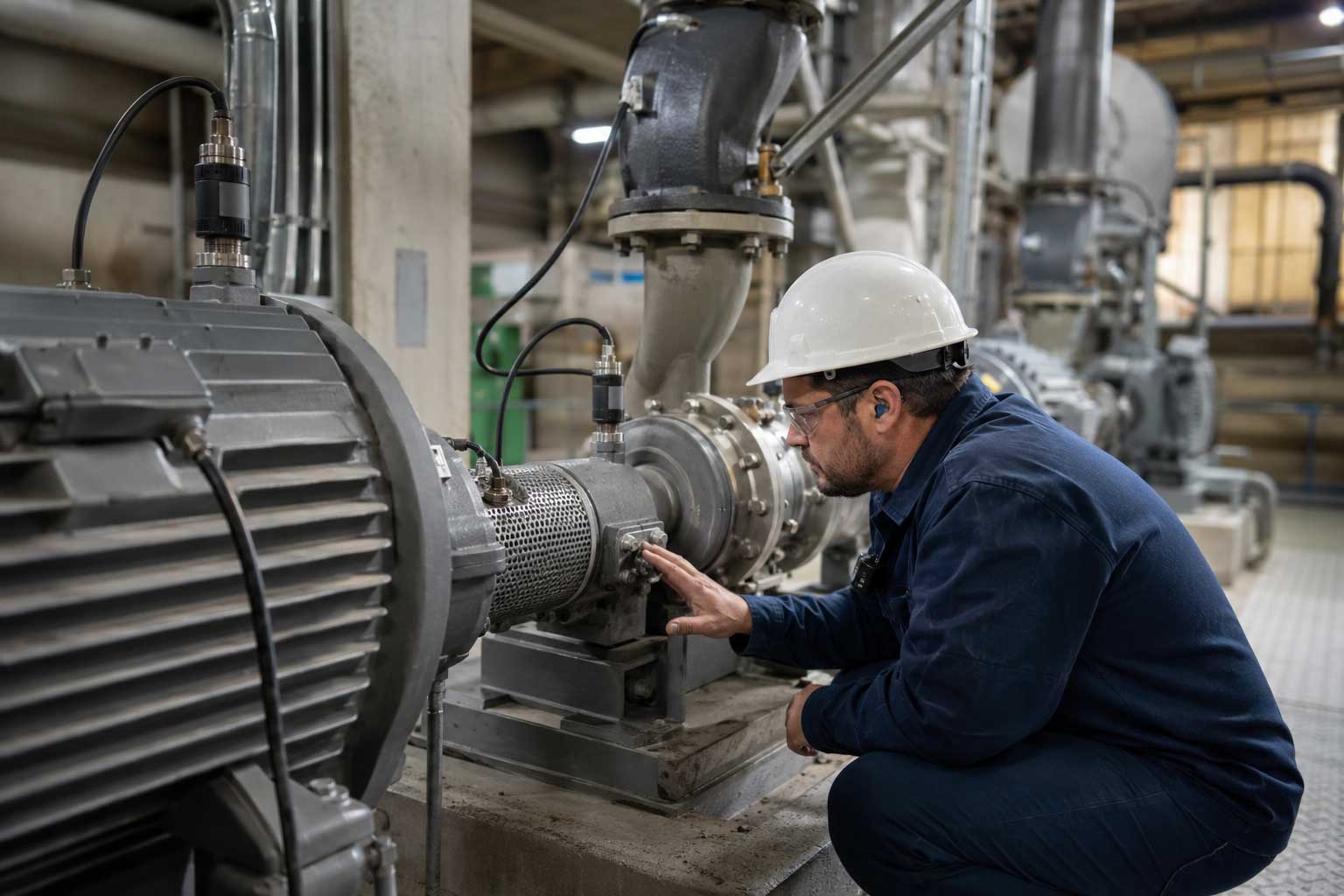
Sensor networks are turning predictive maintenance into a more practical operating model for industrial facilities by converting equipment signals into usable maintenance insight. When vibration, temperature, pressure and rotational data are collected directly from pumps, motors and other critical assets, maintenance teams can identify abnormal patterns before they develop into breakdowns or wider system disruptions. This allows repairs to be planned around actual equipment condition rather than fixed schedules alone, helping reduce unplanned downtime and unnecessary component replacement.
The value of these systems lies in the connection between physical machinery and continuous monitoring. In facilities where rotating equipment supports water systems, manufacturing lines, energy processes or material handling, even small changes in performance can indicate wear, imbalance, misalignment or lubrication problems. By placing sensors across connected assets, operators can build a more complete view of machine health and respond earlier to developing issues.
As predictive maintenance becomes more widely adopted, sensor networks are becoming a key layer in industrial AI and reliability strategy. Their role is not simply to collect data, but to make equipment behaviour more visible, maintenance decisions more precise and long-term asset management more efficient. In this way, sensor networks help transform maintenance from a reactive task into a more intelligent and continuous part of industrial operations.
By Central News Editorial Team
Source: Central.News
Related:
Explore more in Markets, Infrastructure, and AI & Technology.
This article is part of an ongoing editorial series by Central.News covering global systems across Markets, Infrastructure, AI & technology. New insights are published daily.