

CENTRAL.NEWS
Image default
Infrastructure

District Cooling Networks Offer a More Efficient Model for Dense Urban Growth

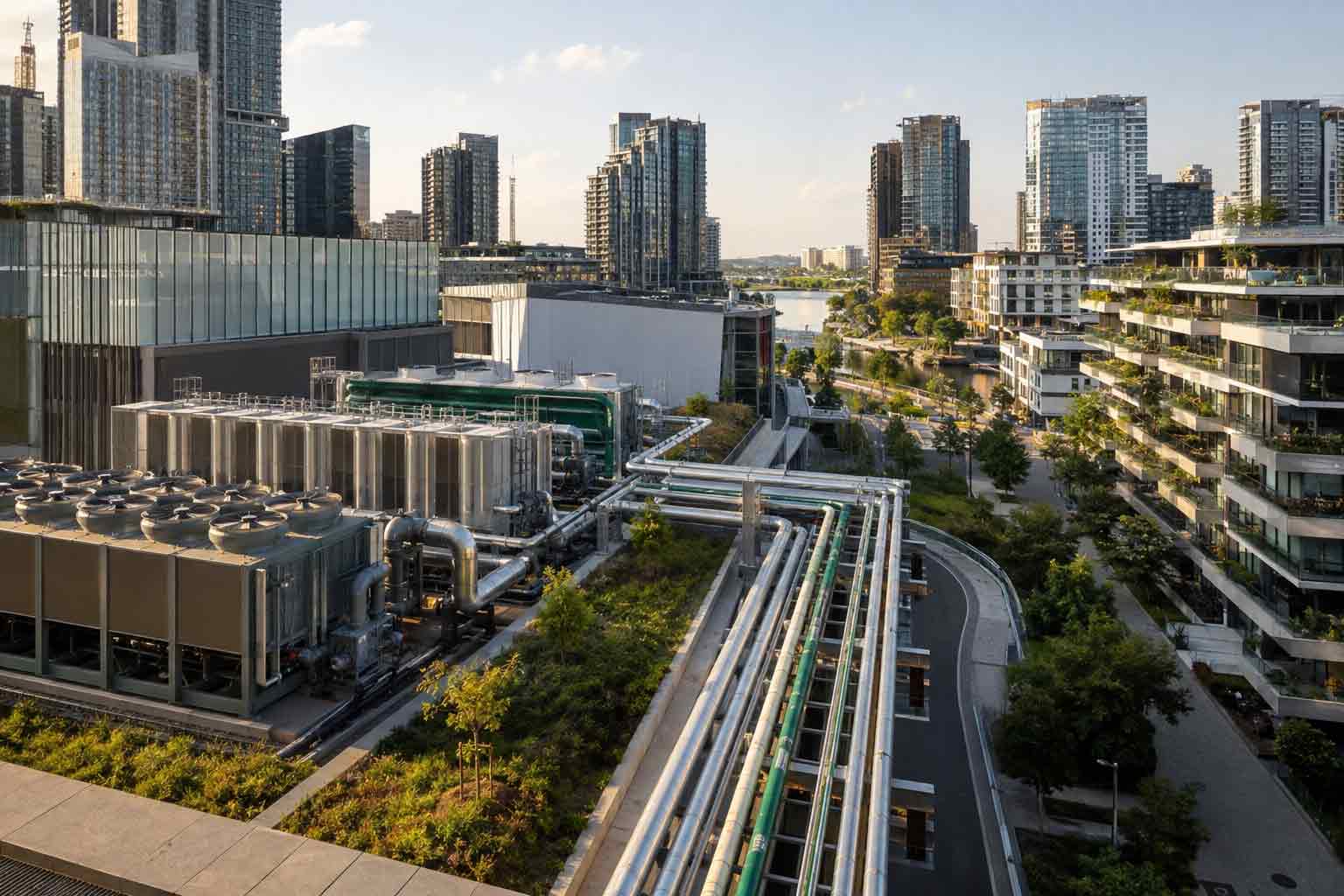
District cooling networks are becoming a more efficient infrastructure model for dense urban growth as cities look for better ways to manage rising cooling demand across residential, commercial and mixed-use districts. Instead of relying on separate building-by-building systems, district cooling uses centralised cooling equipment and pipe networks to distribute chilled water to multiple properties, improving energy efficiency and reducing maintenance duplication. This model can lower peak electricity demand, free up building space and support more coordinated long-term urban planning. As dense cities continue to expand in warmer climates, district cooling is increasingly valued as an infrastructure solution that connects energy performance, land-use efficiency and more reliable urban cooling capacity.

By Central News Editorial Team
Source: Central.News

Related:
Explore more in  Markets,  Infrastructure, and AI & Technology.

This article is part of an ongoing editorial series by Central.News covering global systems across Markets, Infrastructure, AI & technology. New insights are published daily.