

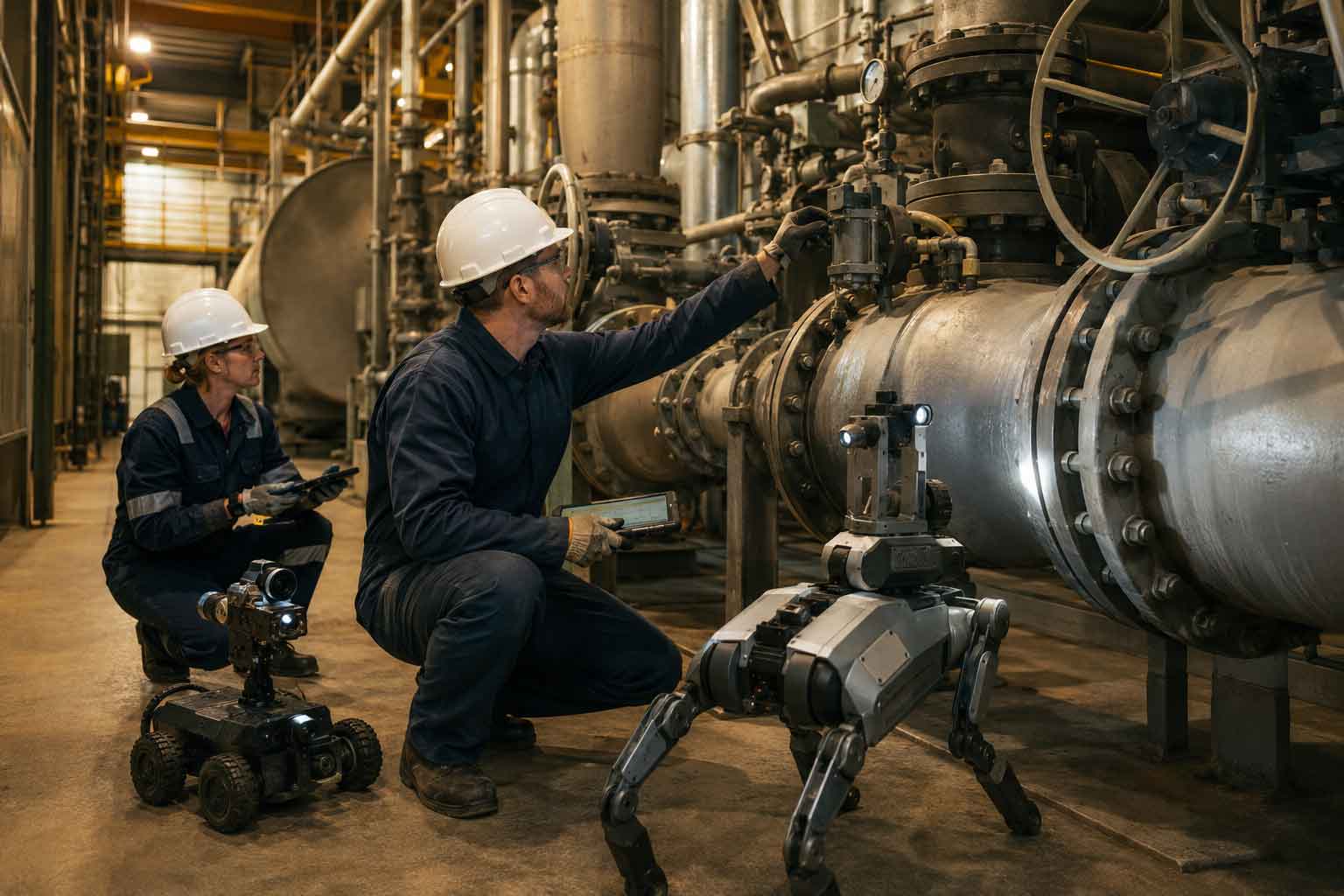
AI-assisted inspection is becoming an important reliability tool across essential services as utilities and industrial operators seek better ways to identify equipment problems before they disrupt operations. Inspection robots, imaging systems and sensor-equipped devices can examine valves, pipelines, pressure equipment and control components in locations that are difficult, repetitive or hazardous for technicians to access. Their role is not to replace engineering judgment, but to give maintenance teams more consistent information about the physical condition of critical assets.
When inspection data is analysed over time, AI systems can help detect changes that may be difficult to recognise during isolated manual checks. Surface deterioration, abnormal heat patterns, vibration changes, leakage indicators and mechanical wear can be compared with previous inspections, allowing technicians to prioritise areas that require closer attention. This creates a more continuous approach to asset condition monitoring across water, energy and other essential service networks.
The wider value lies in connecting automated inspection with human maintenance expertise. Robots can extend the reach and frequency of inspections, while experienced technicians interpret findings, assess operational risk and decide when intervention is necessary. As essential infrastructure becomes more complex, AI-assisted inspection is helping shift maintenance from periodic observation toward earlier, more evidence-based reliability management.
By Central News Editorial Team
Source: Central.News
Related:
Explore more in Markets, Infrastructure, and AI & Technology.
This article is part of an ongoing editorial series by Central.News covering global systems across Markets, Infrastructure, AI & technology. New insights are published daily.