

CENTRAL.NEWS
Image default
AI & Technology

Industrial Robots Are Becoming More Adaptive to Variable Production Environments

Industrial robots are becoming more adaptable as manufacturers move beyond highly repetitive production lines. Traditional robots performed best when parts, positions and movements remained almost identical from one cycle to the next, but newer systems are increasingly able to operate in environments with more variation.

Improvements in machine vision, sensors and control software allow robots to recognize differences in object position, shape and orientation. This means they can handle a wider range of tasks without every movement being programmed around one fixed configuration.

The change is particularly useful for manufacturers producing multiple product versions or operating shorter production runs. Adaptive robotic systems can make it easier to switch between tasks while maintaining automation benefits.

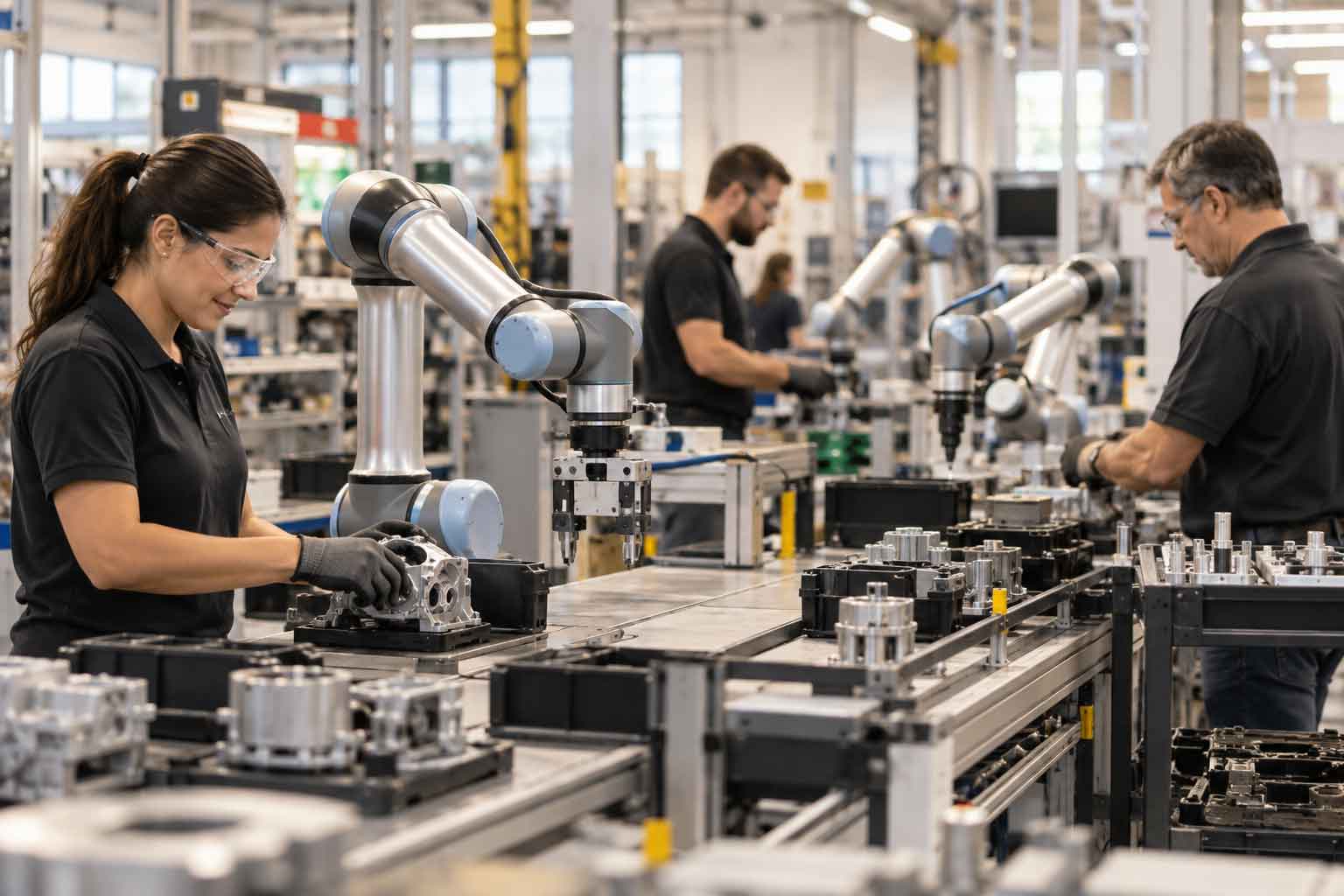
Human workers also remain part of these environments. Collaborative systems can divide work between people and machines, allowing robots to handle repetitive or physically demanding processes while workers manage tasks requiring judgment and flexibility.

The broader significance is that industrial automation is becoming less rigid. As robots become better at responding to changing conditions, automation may become practical across a wider range of factories and production models.

By Central News Editorial Team
Source: Central.News

Related:
Explore more in  Markets,  Infrastructure, and AI & Technology.

This article is part of an ongoing editorial series by Central.News covering global systems across Markets, Infrastructure, AI & technology. New insights are published daily.